The case for land value taxation

Who benefits from a better neighbourhood?

A new station shortens the journey to work. A nearby park makes the area a better place to live. The land becomes more valuable, even if its owner has built nothing new.

The people who help create that value do not automatically share in the gain. Land value taxation offers a way to return part of it to the public budget, while keeping buildings and improvements outside the tax base. That creates an opportunity to fund the places we need without adding a tax penalty for improving them. [03] [01]

Start with the neighbourhood
Aerial view of homes, streets, parks and public transport.
The value of a home reaches beyond its walls.

01 / How a place gains value

The value beyond the building

Imagine the same house in two places: one close to jobs, schools and frequent public transport, the other far from those opportunities. The bricks may be identical. The price of the location can be very different. That difference helps explain why land and buildings deserve separate attention. [03]

An owner can pay for a better kitchen or an extra room. They cannot create the whole neighbourhood alone. Its value also grows through public investment, nearby businesses and the daily activity of other people. When that raises what buyers will pay for a site, the landowner receives a gain that extends beyond their own investment. [03]

A land value tax charges the assessed value of that site each year, excluding the building. The public opportunity is to use part of the value created around a property to support the community that makes the location desirable. Which taxes it replaces, and where the money goes, are choices a reform must make explicit. [01]

TransportJobs & businessesPublic services
Location value
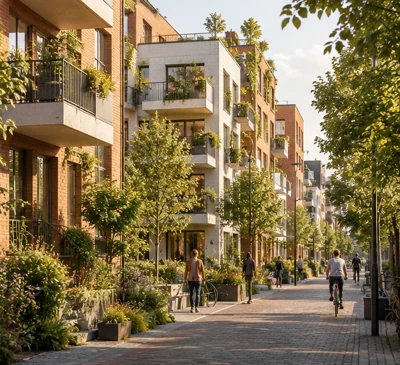
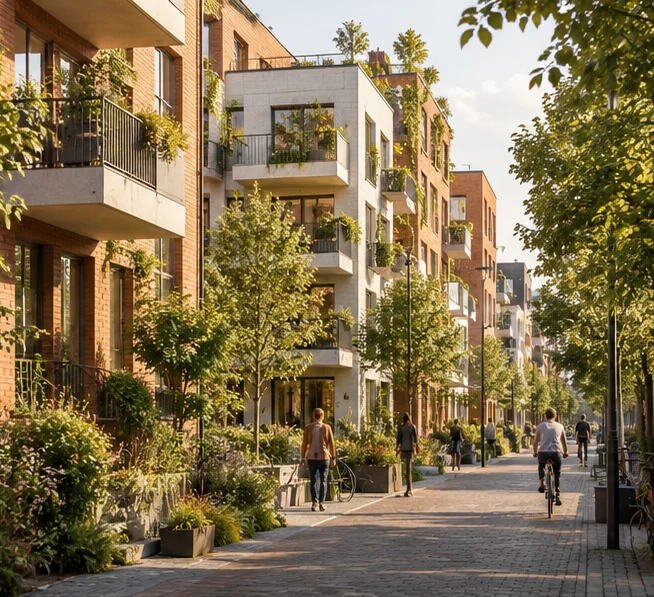
Apartment buildings, balconies, trees and people on a residential street.
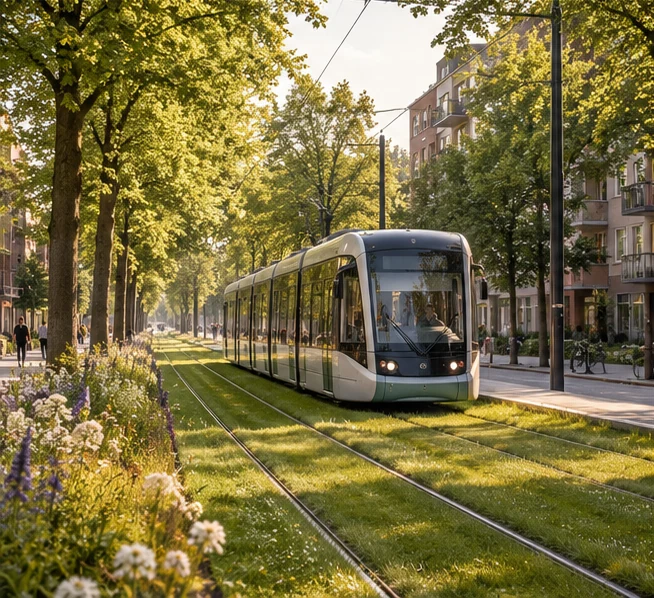
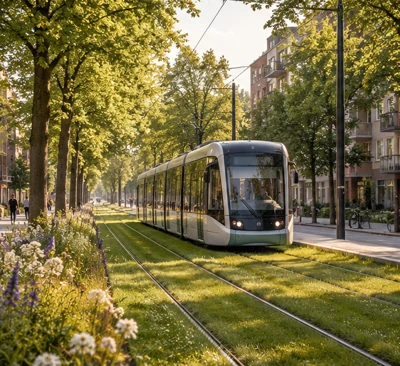
Tram travelling along a tree-lined corridor.
Connections, amenities and demand shape the value of a site.
01

Let public investment help pay for the next improvement

Return to the new station. If better access raises nearby land values, an updated land assessment can bring some of that value into public revenue. The community could use that revenue to maintain transport, improve schools or fund another neighbourhood’s needs. Leaving this connection out of the budget means passing up one way to share the gains from public investment. [03]

02

Give building and holding land different incentives

Under a tax on land and buildings, improving a property can increase its tax bill. A land-only tax removes that direct increase. An equally valuable vacant site still carries a land charge. This changes the financial calculation around building and waiting, although a viable project still needs demand, finance and planning permission. [02]

03

Make the tax shift useful to the people paying for it

The reform can replace part of an existing tax rather than simply add a new bill. The Australian Capital Territory has gradually reduced property-transfer duties while increasing land-based rates. A local proposal should be just as clear about what households receive in return, whose bills change, and how people with valuable land but little income are protected. [07] [10]

02 / See the incentive change

What happens when an owner builds?

Consider two plots whose land is each worth €200,000. One stays empty; the other has a building. At the starting values, both tax systems raise the same total. Move the slider to see which system increases the bill when the owner improves the building.

The basic calculation
Assessed land valueTax rateAnnual land tax

Before exemptions, reliefs or other charges. [05]

A

Vacant land

Land value €200,000

B

Land with a building

Land value €200,000

€400,000

Change the building. Hold land values and tax rates fixed.

Annual tax comparison for two hypothetical plots
Annual taxPlot APlot BTotal
Land + buildings1% property tax€2,000€6,000€8,000
Land only2% land value tax€4,000€4,000€8,000

At the starting values, both systems raise €8,000 in total.

Illustrative amounts in euros

The public revenue still has to come from somewhere. Here, shifting the tax onto land redistributes the starting bill between the two owners. Further investment in the building then leaves its land-tax bill unchanged.

03 / Learning from practice

A practical policy, with choices to make

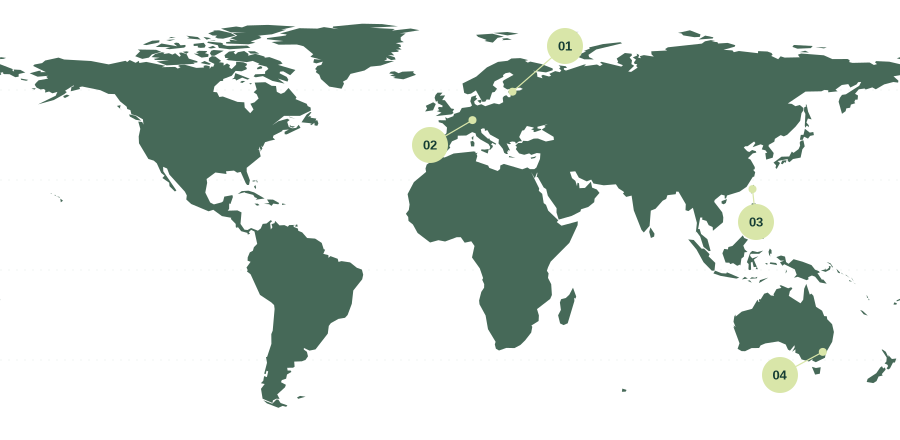
Existing land-based taxes show that valuing sites and collecting revenue are workable tasks. They also show how much the design matters: exemptions change who contributes, valuations determine the base, and a gradual transition can give households time to adjust. These four systems offer different lessons.

World map locating the four examples: Estonia, Baden-Württemberg, Taiwan and the Australian Capital Territory.
Selected examples, not a global inventory.
01

National land tax

Land is taxed on its assessed value. Local rates, reliefs and limits on increases affect the bill. [05]

02

Germany · Since 2025

Its modified land-value model uses plot area and a standard land value. Residential use receives a reduction. [06]

03

Annual land value tax

Assessed land values form the tax base. Special rates and agricultural rules shape who pays. [08]

04

Australia · Reform since 2012

A long-running reform shifts revenue from transaction taxes towards broad-based, land-based rates. [07]

04 / From a proposal to results

Turning the opportunity into public benefit

A better incentive is a starting point. Homes still need land where building is permitted, infrastructure, finance and people who want to live there.

A 2026 evidence review for the Welsh Government found modest development effects in some high-demand locations, with wider claims less firmly established. That makes the local design central: the tax base, rates and planning system have to work together. [09]

Read the evidence reviewopens a new tab

What the tax changes

Excluding buildings removes the direct tax increase on an improvement. The charge follows the site’s assessed value. [02]

What a reform must deliver

Judge the result by the services funded, changes in individual bills and what actually gets built. A higher land-tax receipt is only one part of that picture. [09]

05 / Making the change fair

What would it mean for you?

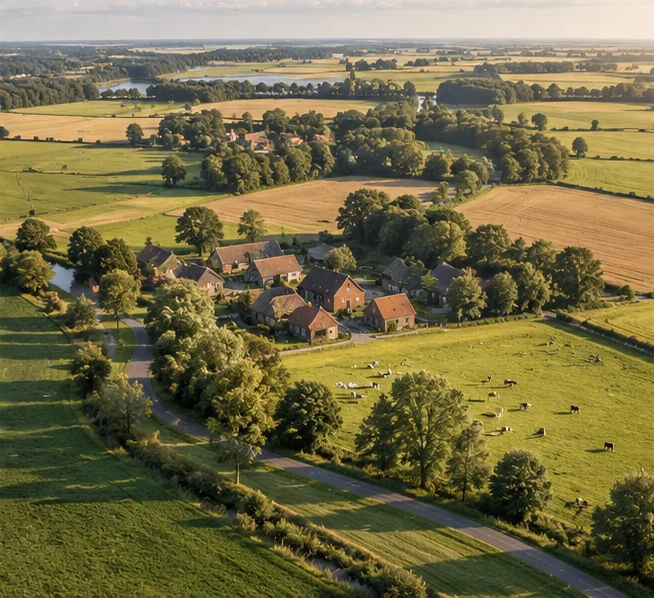
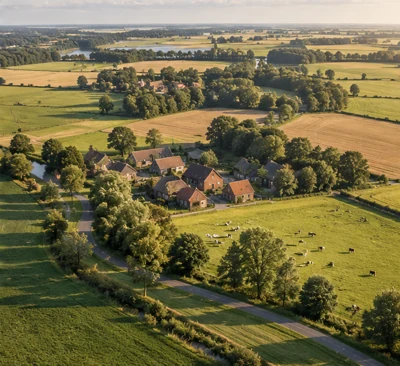
Countryside with farms, fields, trees and a small village.

Explore the details

The value is already being created.

Every day, people and public investment make places more useful. Land value taxation offers a way for some of the resulting value to support shared needs. The next step is a concrete local proposal: what it would fund or replace, how land would be valued, and how the transition would treat the people who live there. [10]

Follow the sources

Keep reading.

Close

C2PA / Content Credentials

How this page was made

The image files contain signed C2PA Content Credentials.

Signed by the publisher using a private certificate authority. The signer is not on the public C2PA trust list.

Inspect the image credentials

Download an image to inspect its embedded credentials. Verification reports and the publisher certificate are available below.

Open Content Credentials inspector · Publisher certificate

Explore the details